


Starting an MLM company is a lot more than picking a product and a commission plan. You’re building a product business, a sales force and a compliance program all at once, and the legal side can sink you faster than bad sales. This guide walks through the steps in the order you actually need them, with the honest parts left in.
If you’re new to the model itself, start with our guide on what multi-level marketing is.
The honest part first
Most MLM startups fail, and most people who join MLMs earn very little. That isn’t a reason not to start one, but it should shape how you build it.
The line that matters is the one between a legitimate MLM and a pyramid scheme. Regulators like the FTC look at where the money comes from. If your sellers mainly earn by selling real products to real customers, you’re on solid ground. If they mainly earn by recruiting people and those people buying in, you have a problem, no matter what you call it. The FTC’s business guidance on multi-level marketing is worth reading before you design anything. For a recent example of what enforcement looks like, see our breakdown of the Amway $225 million FTC settlement.
Build everything below around one rule. Your company should still make sense if nobody ever recruited anyone.
Step 1 · Pick a product people buy for its own sake
The best test is simple. Would someone buy this product if there were no business opportunity attached? If the answer is no, the opportunity is the product, and that’s the pyramid problem in disguise.
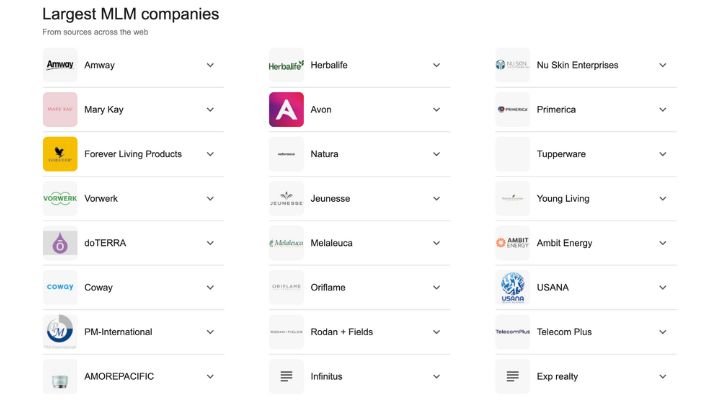
Look at what the biggest MLM companies sell. It’s mostly consumable stuff people buy again and again, like supplements, nutrition, skincare and household goods. Repeat purchases are what keep a commission plan funded month after month.
Step 2 · Check that the numbers work
In an MLM, a big slice of every sale goes out as commissions to several levels of sellers. That money has to come from somewhere, so your product needs healthy margins after manufacturing, shipping, payment fees, returns and your own overhead. Work this out on paper before you spend money on anything else. If the math only works when people keep recruiting, it doesn’t work.
Step 3 · Get a lawyer who knows MLM
This is the step people skip, and it’s the one that hurts most later. Form your business entity properly, then talk to an attorney who specialises in direct selling. They can review your compensation plan, help you write your policies and procedures, and tell you which state and country rules apply to you. Some states have their own business opportunity laws on top of federal rules.
Step 4 · Design a compensation plan that pays on sales
Your plan decides how your sellers get paid and how your downline is structured. The three common types are unilevel, binary and matrix, and our guide to the binary and unilevel MLM plugin explains how they differ. Whichever you pick, keep these rules.
- Pay on product sales, not sign-ups. No bonuses just for recruiting someone.
- Keep the cost to join low. Big starter kits and required monthly purchases are red flags for regulators and for recruits.
- Don’t push inventory loading. Sellers shouldn’t be stuck with product they can’t sell.
- Offer a fair buyback. Let people who quit return unsold product for a refund.
Step 5 · Sort out payments and fulfilment
Many payment processors treat MLMs as high risk, so expect more paperwork, a reserve or higher fees. Get a merchant account approved before launch, not after. Then decide how orders get packed and shipped, whether you handle it yourself or use a fulfilment company, and write a clear return policy.
Step 6 · Build your website and back office
Your website is where customers buy, sellers sign up and commissions get tracked. You don’t need custom software that costs five figures. WordPress with two plugins, Ultimate Membership Pro and Ultimate Affiliate Pro, handles memberships, referral tracking, downlines and commission payouts. Our free Ultimate Membership Pro tutorial and Ultimate Affiliate Pro tutorial walk through the setup.
If you were planning to buy a theme and call it done, read our guide to MLM website templates and what works better first. And if you’d rather not build it yourself, we offer done-for-you MLM website design.
Step 7 · Write your policies and income disclosure
Before anyone joins, you need written policies and procedures, a seller agreement, and a plan for publishing an income disclosure statement once you have real numbers. Train everyone from day one not to make income claims or health claims they can’t back up. Exaggerated earnings promises are one of the most common reasons regulators step in.
Step 8 · Find your first customers and sellers
Start with customers, not recruits. Early buyers tell you whether the product sells on its own merits. Then bring in a small group of founding sellers who actually use and believe in the product. A few honest, active sellers are worth far more than a big team that joined for the pitch.
Step 9 · Train and support your sellers
Give your sellers real training on the product, on selling it honestly, and on what they can and can’t say. Short videos, a simple handbook and a place to ask questions go a long way. A private community area on your own site keeps everyone in one place, and our guide on creating an MLM community website shows how to set one up.
Step 10 · Launch small, then grow
You don’t need a giant launch event. Launch to a small group, fix what breaks, and watch the numbers that matter, which are retail sales, repeat orders and how many sellers are still active after 90 days. Grow once those look healthy.
What it costs to start an MLM company
Costs vary a lot depending on your product and how big you start, but the main buckets are these.
- Product. Development, first inventory and packaging are usually the biggest cost.
- Legal. Entity setup plus an MLM attorney to review your plan and documents.
- Website and back office. The WordPress plugin route runs about $120 to $150 in plugin licences plus hosting, far less than custom MLM software.
- Payments and fulfilment. Merchant account fees, reserves and shipping.
- Marketing and training. Samples, content and seller materials.
Frequently asked questions
Is it legal to start an MLM company?
Yes, MLM is legal in the US and many other countries, as long as your sellers earn mainly from selling products to real customers and not from recruiting. Get an attorney who specialises in direct selling to review your plan before you launch.
Can I start an MLM company with no money?
Not really. You need a product, legal advice and a way to take payments, and those all cost something. You can keep the website side cheap by building on WordPress, but plan on real startup costs for product and legal work.
How long does it take to start an MLM company?
Expect several months at minimum. Product development, legal review and payment approval are usually the slow parts. The website can be ready much faster.
What is the best compensation plan for a new MLM?
There’s no single best plan. Unilevel is the simplest to understand and run, which makes it a common choice for new companies. Binary and matrix plans can work too, but they’re harder to explain and easier to get wrong.
Want your MLM website built for you?
We build multi-level marketing websites on WordPress, done for you, with your compensation plan set up and tested before you launch.